Thirteen Frequently Asked Questions About Unschooling
A Parent’s Perspective on Unschooling in Real Life
When we first started unschooling, I would get on the (now defunct) unschooling.com message boards and ask questions. Lots of them. These quickly became “Dragonfly’s Question of the Day,” and the women and men who answered me showed considerable patience and creativity in their replies. Nowadays, I answer a fair number of newbie questions myself. I mostly enjoy it, and I am mostly patient in my replies. Creative? Not so much. There are only so many ways to answer the same questions.
That being the case, here are some FAQs and my answers to them.
1. How will my kids learn anything if I don’t teach them?
They will learn the way adults learn. Something will catch their interest, they will explore it until they are satisfied (for now), and then they’ll move on. Later, they’ll learn something else that reminds them of that thing they learned before, and they’ll make a connection. “Oh, hey, that’s like...” True knowledge is made up of those connections, and that’s what unschoolers value.
2. I’m ready to try unschooling, but my spouse/partner isn’t convinced. What do I do?
Remember that your partner’s concerns stem from the same place that your interest in unschooling does: wanting the best for your kids. Approach your partner with that common goal in mind and ask to be given some time to explore this intriguing way of homeschooling.
Share some resources. Encourage participation. Ask for a moratorium on criticism of how the kids’ time is spent.
As an aside, I’m not entirely sure why Frank went along with it. It was a big leap for such an academically minded guy. Maybe it was faith in me, maybe it was faith in our kids, maybe it was a simple desire to be agreeable and get me to be quiet. Whatever. He signed off on
the experiment, and no more than three months later found himself in the role of stay-at-home unschooling dad. And here we are...
3. How do we start?
Relax. Take your summer vacation now (even if it’s the dead of winter). Say “Yes” a lot. Have fun. Play with your kids. Watch. Wait. Stay calm. Get support from other unschooling parents. Strew.
Strewing involves making a wonderful variety of resources available to your kids with no expectation or requirement that the resources ever be used. The things you strew can be in support of interests your child has expressed or about just any old thing you think of. Strewed items can be books, toys, or supplies, left casually on tables or in bathrooms, presented quietly to your child, or presented with great fanfare and excitement. They can be posters hung on walls, craft or music or gaming activities that you start, Web pages left open on the computer, magazines subscribed to, alternate driving routes taken, and so on. It is SO fun to do, and it creates an environment of discovery and fun in your house. Strewing can happen in and around all your usual activities, even during busy times (it doesn’t require a big investment of time). But never doubt that your usual activities can provide a lot of strewing, too. For example, getting ready for a family vacation can strew
lots of history and geography and other interesting tidbits. The vacation itself? Even more so.
4. What is deschooling?
Deschooling is the process of shaking off the routines and expectations of school. It’s time for rediscovering the joy of learning. It’s a period of healing. I replied once to a concerned mom whose son was deschooling by playing a lot of video games: “Your son needs to play those games. He needs it the same as he needs food to eat and air to breathe. Try thinking of the time he spends on those games as chemotherapy. If he had cancer, you wouldn’t begrudge him his treatments, right? Well, the schooling has been eating away at his joy, sense of self, curiosity and creativity, much like a tumor eats other cells.”
For kids, the cure for this “brain cancer” is simply time spent doing just whatever they want. Ideally, they have the unflinching support of their parents during this time. How much time? The usual rule of thumb for kids is one month of deschooling for every year spent in school.
Staying calm and quiet during that time is not easy! But it is very much worth it. For parents, deschooling can take much longer. Or it comes in waves. We’ve been unschooling for more than six years, and Frank and I still have to monitor our thoughts, speech, reactions, and expectations. We still explore unschooling concepts regularly and talk about them with other unschooling parents. For us, living this life requires regular refresher courses. So to speak.
5. What do I tell the school district?
That you’re homeschooling. You are! Recordkeeping requirements vary from state to state. One of the most rigorous is probably New York, with its IHPs and portfolios and I don’t know what all. And yet many unschoolers thrive in New York, without telling a single lie. Start keeping a journal of your kids’ daily activities. At intervals, translate what they’ve been doing into school-speak. You’ll be surprised at how many age-specific learning objectives they touch on, naturally. Others, they’ll touch on at different ages (oftentimes much earlier than the schools would introduce them), but they’ll still get them. They don’t call ‘em “the basics” for nothing. And a perusal of World Book’s Typical Course of Study will show you exactly how basic the basics are.
6. That’s fine for elementary school, but what about high school?
First off, question your assumptions. High school does not look the same for every student,and the high school years will not look the same for every unschooler. Some end up taking some courses. Some get intrigued by a subject and read college-level textbooks. Some learn skills on their own by following interests that lead them into jobs that become careers. Some create an all new path to a life that our schooled brains have trouble even imagining. And some do a combination of these. A big part of an unschooling parent’s job is finding ways for our kids to learn what they want to learn. Get creative!
7. Can unschoolers get into college?
Yes! To a college, an unschooler is a homeschooler. Homeschooler entrance requirements will vary from college to college, so the better question here is, How can a particular unschooler get into The School that will help her achieve her dreams? You can’t plan for every college in the world. Pick the few that your kid is most interested in, learn their requirements, and then go from there. And keep in mind that there’s no law that says the applicant has to be able to meet their requirements by age 18 or any other magic-number age.
Cafi Cohen has written a good bit on the subject of homeschoolers getting into college.
8. What about socialization?
Unschoolers find this question is laughable. Our kids are out in the world, socializing with real people doing real things. My kids have hundreds of friends of all ages, and their friendships tend to be far more intimate and joyful than anything I experienced in school.
9. Will my child fall flat, or fall short, if I don’t push/encourage/expect?
Unschooling parents encourage our kids all the time, so I wouldn’t group that with push and expect. But consider this: Will your child fall flat if you do? It’s possible. You can do damage with pushing and expectations. And traditional schooling and parenting certainly offer no
guarantees for success.
10. How will my kids learn self-discipline?
What do you mean by self-discipline? Do you mean the ability to stick with a plan? Do you mean the ability to do something unpleasant that just has to get done? Do you mean taking care of hygiene every day? Do you mean housework? All of those?
Ask yourself this: How does schooling really contribute to any of that? Is schooling what made you into a responsible adult, or was it real life or natural inclination that did that? Both of my children have completed major projects. Both have faced frustrations and disappointments and persevered anyway. Both shower regularly and are “presentable” most of the time. Both have messy bedrooms that they have, at one time or another, voluntarily cleaned. Both have helped us get ready for houseguests. They sound like regular kids, don’t they?
11. I’m okay with unschooling for academics, but the radical unschooling lifestyle seems like too much!
How do I relax about _______? (food choices, hygiene, appearance, chores, manners, time spent indoors/outdoors, time spent on TV/computers/video games, reading, etc. etc. etc.)
For me, most anything that goes in that blank boils down to societal expectations (“the shoulds”). Sure, some of them can be couched in terms of the child’s health and welfare or future happiness. But what I found when I examined them closely, and actually tried the unschooling way, was that there wasn’t any evidence that the societal way led to any better outcome than the unschooling way.
My biggest weapons for stripping away societal expectations and getting down to what was right for our family are “Why?” and “Why not?” Anytime the reason behind a “should” boils down to any form of “what will people think,” I throw it out. That reasoning is simply not valid
in our lives. And anytime the reason boils down to my preferences or beliefs or assumptions, I throw that out, too.
12. I’ve heard unschooling described as “unparenting.” Do you neglect your kids?
You know, this is probably in the eye of the beholder. I don’t force my kids to brush their teeth, so one might say I neglect their dental hygiene. I never force my kids to eat their vegetables, so one might say I neglect their nutrition. But my children's choices are never
limited by a lack of supplies, options, or information. I never neglect their intellects.
Sure, I could run around screaming, “Respect my authoritah!” Okay, I admit it, that happens from time to time. The result is general hilarity and, yes, the respect I deserve. And I could do more than that. I could punish, withhold privileges, nag, threaten, shame, tease, and generally make a nuisance of myself. But what would it get me? Kids with cleaner teeth? Maybe, maybe not. Kids with healthier bodies? Maybe, maybe not.
What I know it would get me—because I have lived it—is battles. A home full of battles. No thanks.
13. What if we decide to unschool and it ruins our kids’ lives?
What if you leave them in school and that ruins their lives? How is that path any safer than the unschooling path, when taking a quick spin on Google will show just how fraught with peril is school?
I took an early step toward embracing unschooling when someone on the old unschooling.com boards asked if I was sure school would prevent any of the things I was fearful of. The answer, of course, was no. There are many people who force their kids to Do Everything Right who end up with angry and rebellious kids, kids who drop out of high school, unhappy-but-successful kids, or some combination of these.
There are no guarantees. All you can do is choose how you will respond to the reality of life today. This moment. All you can do is choose the kind of parent you want to be today, the kind of life you want your kids to have today, and the kind of relationship you want with them today.
Everything else follows from that.
_______________________________________________________________________________________________________________________________________
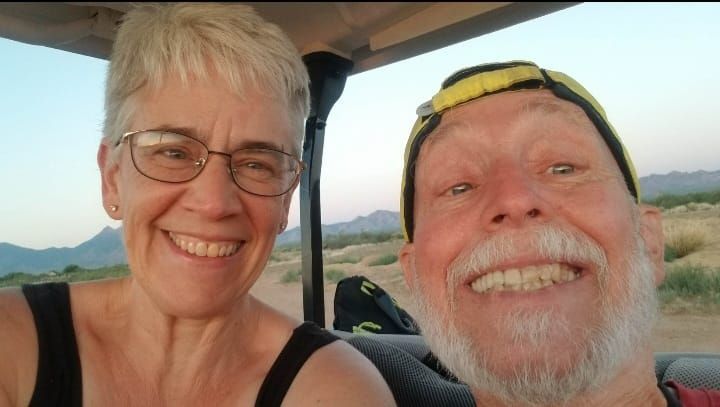
Ronnie Maier is the mom of two fabulous adult unschoolers. She is currently adventuring in AZ with Frank, her partner of 35 yrs, and their grumpy cat. This piece was originally published in the 2009 LIFE is Good Handbook and is shared here with gratitude for her enduring voice in the unschooling community.
Join Us for the Final Chapter
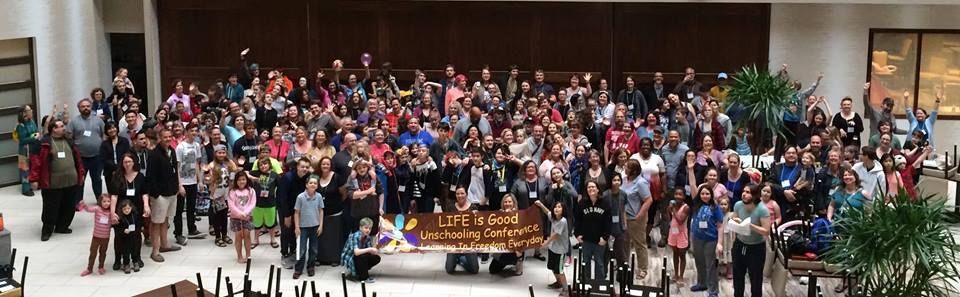
As we look back on where it all began, we are also preparing to close this beautiful circle. I would love for you to join us for the final chapter of the LIFE is Good story at this year’s conference, a celebration of community, connection, and nearly two decades of learning in freedom.
Recent Blogs